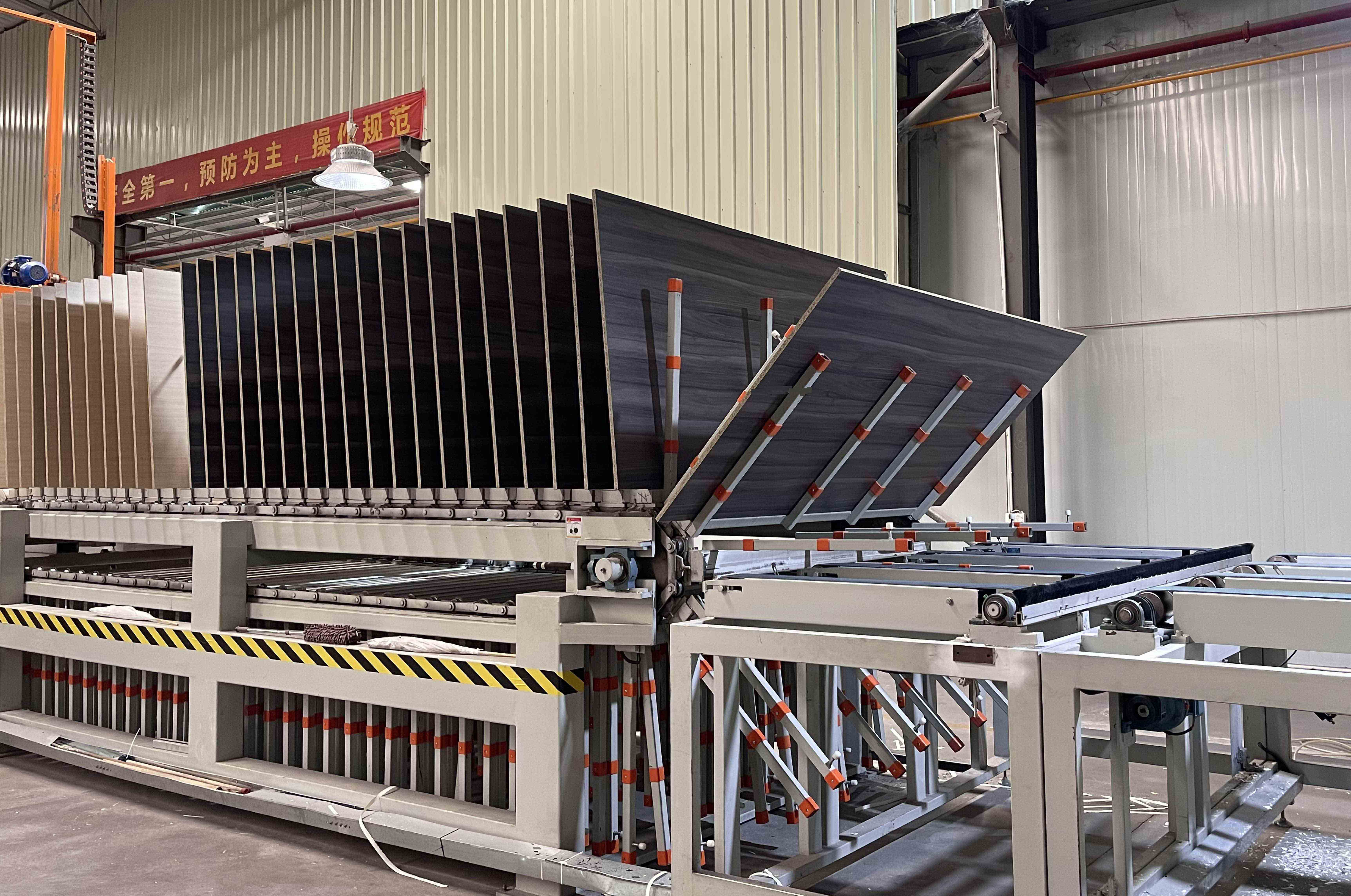
Solid raw wood treatment: First of all, trees need to be treated by cooking and other processes to remove the bark. The treated logs are cut into thin skins.
Cutting and soaking: The natural wood are cut into 0.1MM to 1.0MM slices and soaked for better handling.
Drying: The drying process makes the solid wood bark more stable.
Substrate selection and treatment: Select the appropriate substrate, such as MDF, particleboard or multilayer solid wood panels. The substrate needs to be sanded to ensure a smooth surface.
Glue coating: Apply a layer of special glue evenly on the coating machine, and the consistency and coating amount of glue should be strictly controlled.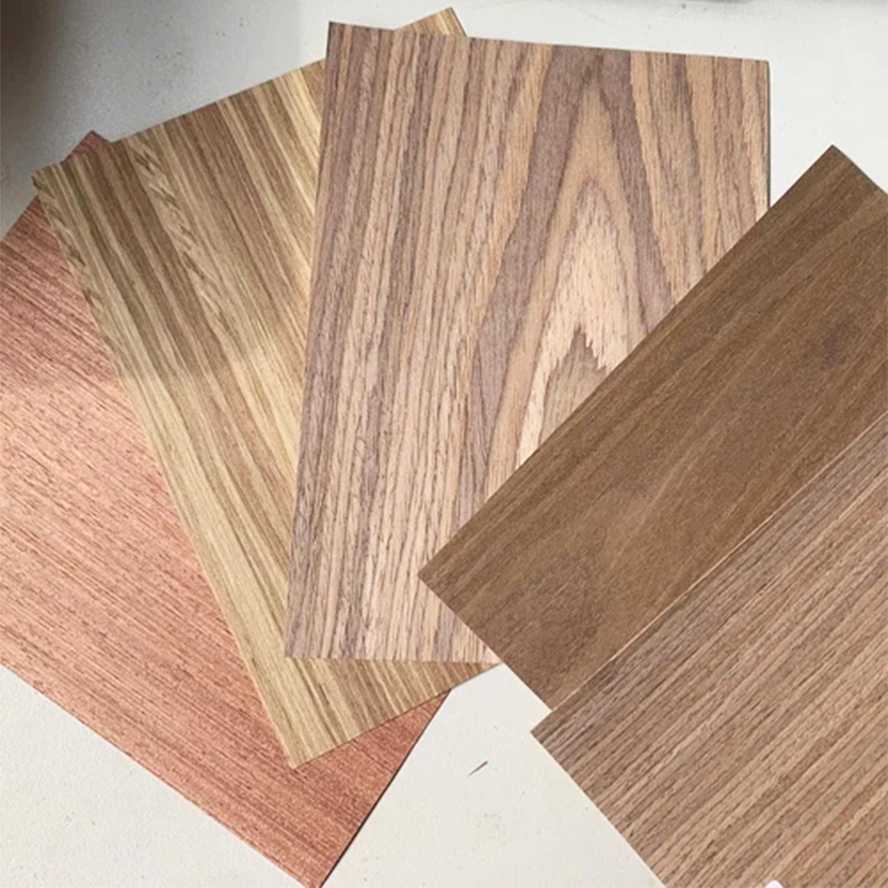
Veneer: The treated wooden veneer is pasted on the surface of the substrate, usually through a high temperature hot press for bonding, to ensure that the wood veneer and the substrate are firmly bonded.
Finish: The fitted sheet needs to be sanded, deburred, sanded and polished to ensure a smooth surface.
Coating: The use of environmentally friendly UV paint coating, enhance the surface protection and aesthetics. The coating process can be selected by spraying, roller coating or brush coating.
Drying and curing: After the coating is completed, the surface of the UV paint is cured to improve the scratch resistance and waterproof and antibacterial properties of the decorative panel.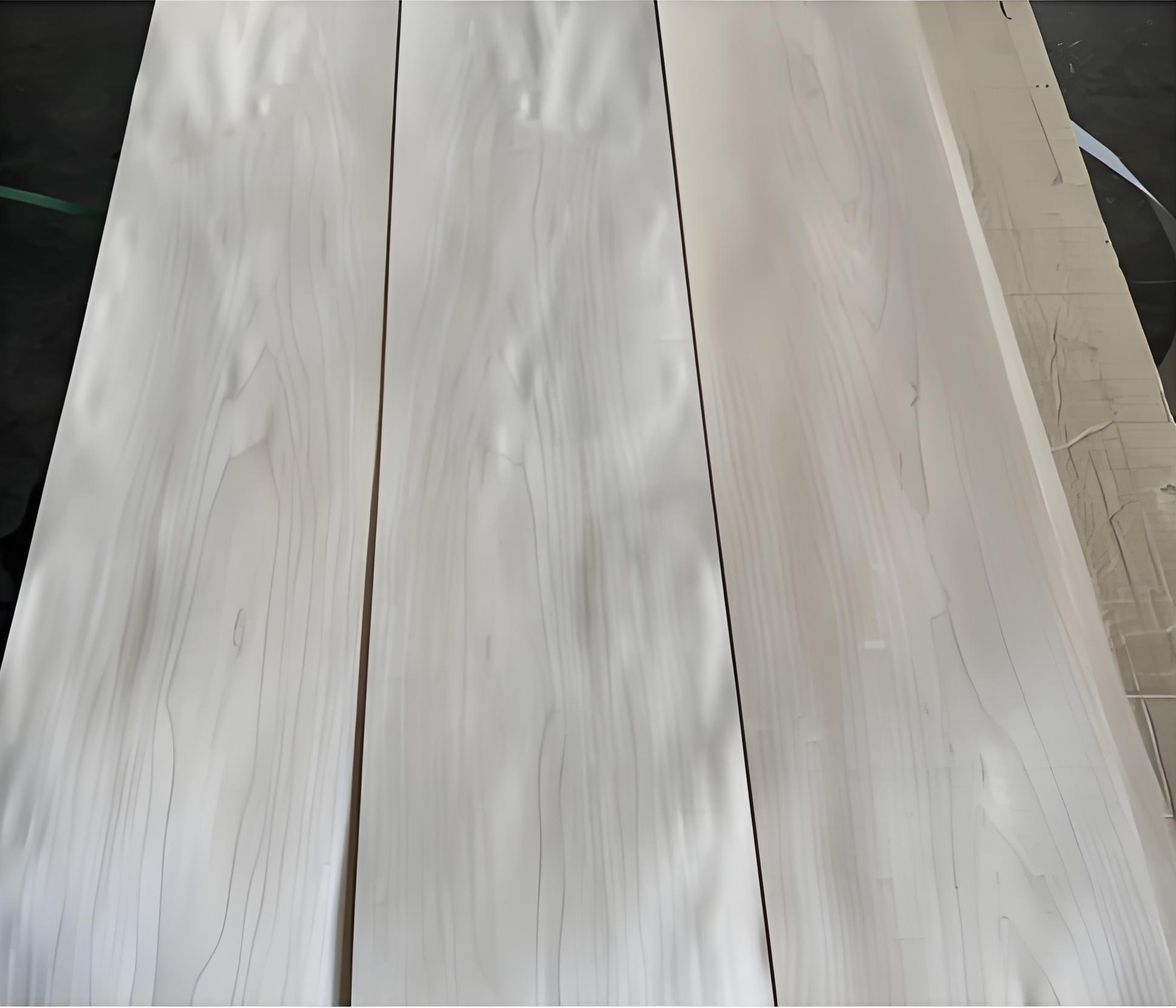
Natural wood veneer is a layer of thin flakes peeled off from the solid wood part of trees, which is usually used for the surface of wood products such as furniture, doors and windows, and decoration. The following is a detailed explanation of the solid wood peel:
Formation process: The formation of solid wood bark requires a number of steps, including the selection of suitable trees, sawing wood segments, using a peeling machine to peel off the skin or outer wood parts, drying, dressing, grading, etc., and finally cutting into different sizes and shapes for use.